
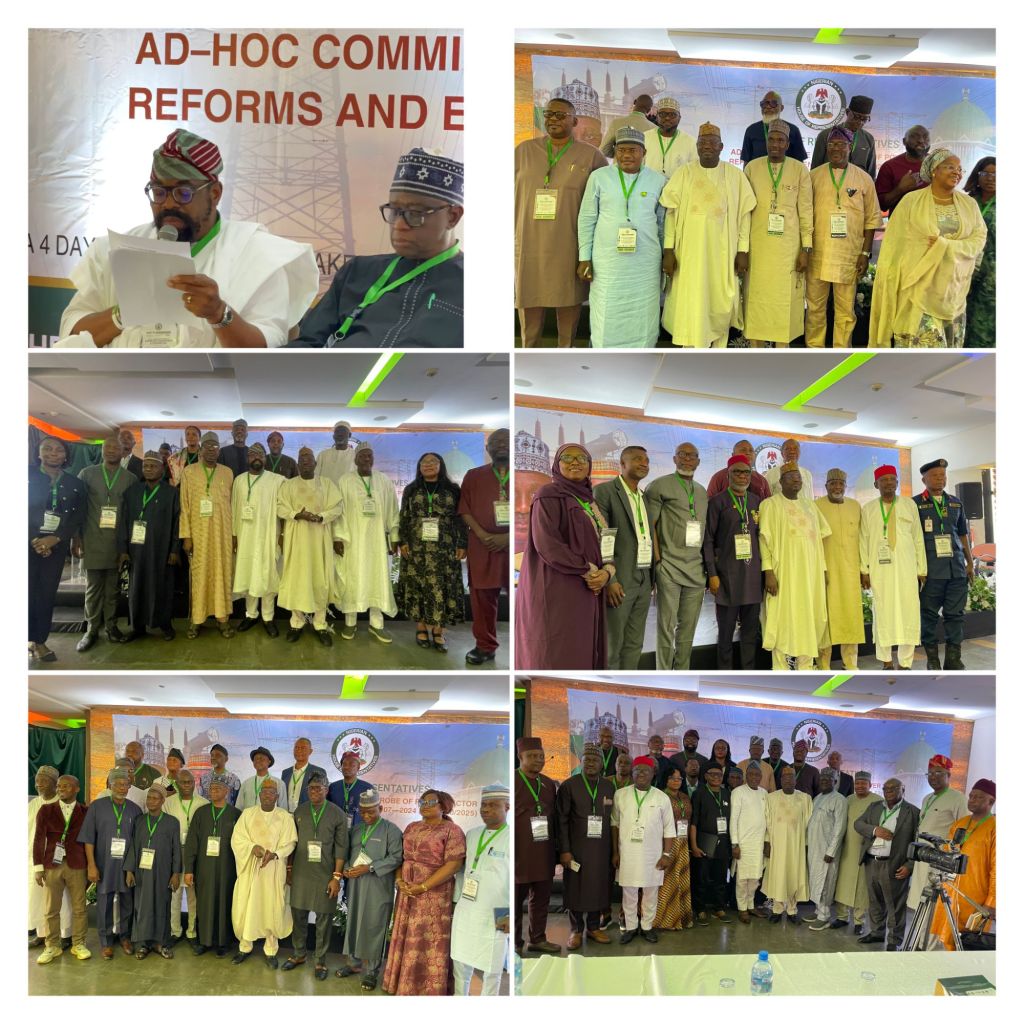
Stakeholders in Nigeria’s electricity industry have advocated the removal of power sector subsidies and the development of state-based power generation projects as part of far-reaching recommendations aimed at addressing the country’s persistent electricity challenges. The proposals emerged at the conclusion of a four-day Parliamentary Roundtable and Stakeholders Engagement organized by the House of Representatives Ad-Hoc Committee on the Probe of Power Sector Reform and Expenditure (2007–2024) at Eko Hotel and Suites, Lagos, where regulators, operators, investors, policymakers, and consumer groups deliberated on strategies to strengthen and transform the nation’s power sector.
The summit brought together key stakeholders across the Nigeria Electricity Supply Industry (NESI) value chain, including representatives from the Federal Ministry of Power, Federal Ministry of Petroleum Resources, Nigerian Electricity Regulatory Commission (NERC), Nigerian Midstream and Downstream Petroleum Regulatory Authority (NMDPRA), Nigerian Upstream Petroleum Regulatory Commission (NUPRC), Bureau of Public Enterprises (BPE), Independent System Operator (ISO), Niger Delta Power Holding Company (NDPHC), generation companies (GenCos), distribution companies (DisCos), gas suppliers, financial institutions, state electricity commissions, consumer advocacy groups, and civil society organizations.
The grand finale featured presentations by the chairmen of the various technical working groups, including Hon. Fuad Kayode Laguda, Hon. Isa Mohammed Anka, Hon. Dalyop Fom Chollom, Hon. Buba Jajere, Hon. Ogene Victor Afam, Hon. Harrison Nwadike, Hon. Jeremiah Umaru, and Hon. Sergius Ogun, who formally submitted their findings and recommendations. The session was moderated by Hon. Taofeek Adeyemi Alli, who guided discussions and coordinated proceedings throughout the event.
Receiving the consolidated report on behalf of the National Assembly, Chairman of the Ad-Hoc Committee, Hon. Ibrahim Almustapha Aliyu, commended participants for their dedication and depth of engagement throughout the exercise. He assured stakeholders that the committee would present the comprehensive report before the House of Representatives for legislative consideration and necessary action.
While acknowledging notable gains recorded since the privatization of the power sector, including increased private sector participation, improved generation capacity, and reduced direct government funding obligations, stakeholders noted that the electricity industry continues to face significant structural challenges.
According to the resolutions, persistent financial deficits arising from tariff shortfalls, legacy debts, and poor revenue collection remain major threats to the sector’s sustainability. Participants also identified inadequate generation, transmission, and distribution infrastructure as critical constraints, with the national transmission network continuing to suffer bottlenecks that contribute to grid instability and limit power evacuation.
The roundtable further highlighted gas supply shortages, widespread energy theft, vandalism, metering gaps, and estimated billing practices as factors undermining consumer confidence and industry performance.
To address these challenges, stakeholders adopted a series of market-driven recommendations aimed at strengthening privatization outcomes, enhancing regulatory frameworks, and accelerating reforms across the generation, transmission, and distribution segments of the industry.
A key resolution of the summit was the affirmation that privatization has delivered better outcomes compared to the era of full government control. Stakeholders therefore recommended a gradual reduction of government operational involvement in the sector and called for the eventual removal of electricity subsidies to create a fully cost-reflective and investment-friendly market capable of attracting significant foreign direct investment.
In a bid to address longstanding transmission and distribution constraints, participants advocated for increased collaboration between private sector developers and state governments to establish decentralized 100-megawatt generation clusters across states. The proposed model is expected to provide dedicated power supply to industrial and commercial hubs while reducing dependence on the national grid.
The summit also expressed concern over weak enforcement mechanisms that have hampered investor confidence and resolved that the Electricity Act should be amended to establish Special Courts dedicated to the speedy prosecution of individuals and groups involved in energy theft and power infrastructure vandalism.
Additionally, stakeholders recommended the immediate deployment of advanced drone technology to monitor and safeguard critical electricity infrastructure nationwide, describing it as a necessary step toward strengthening security and reducing vandalism within the sector.
The resolutions are expected to form part of broader legislative efforts by the House of Representatives to address longstanding challenges in Nigeria’s power sector and improve electricity supply across the country.
 ajasainfo.com
Leave a Reply