
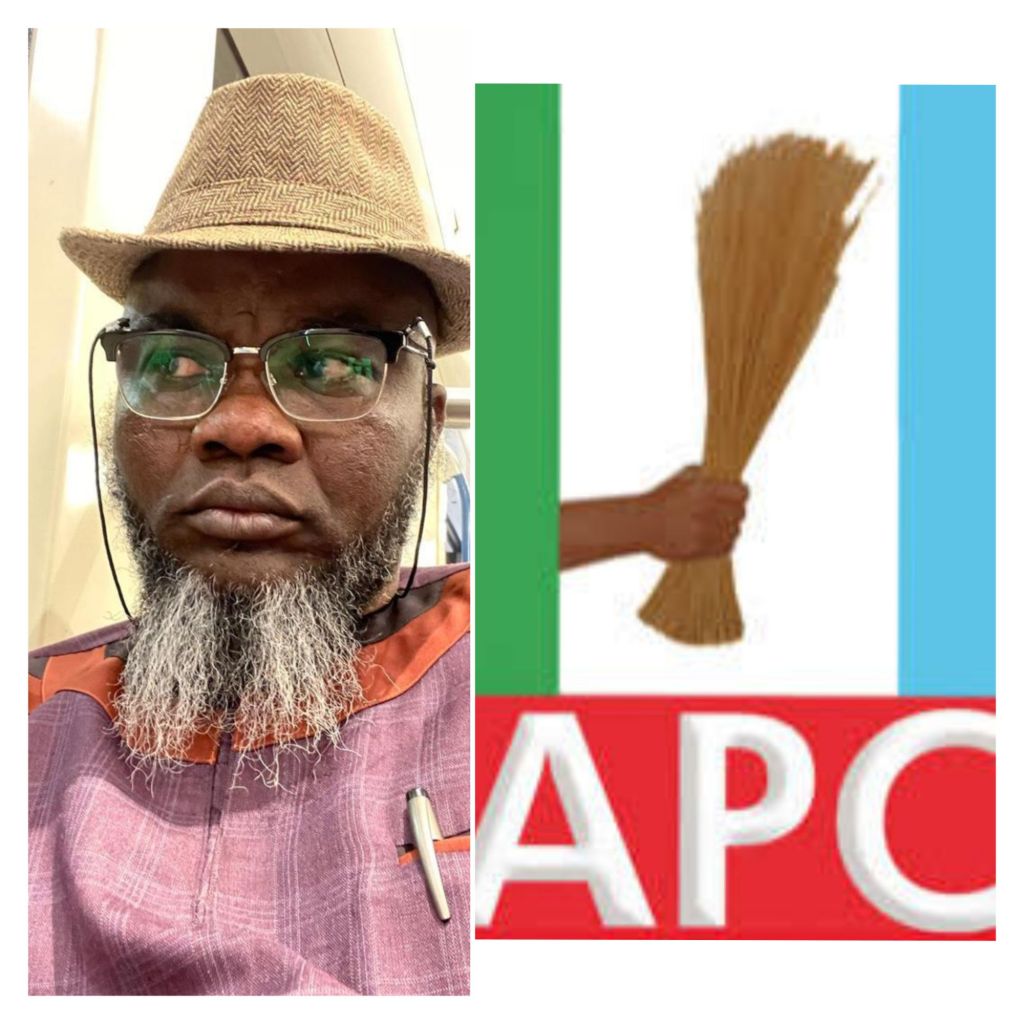
A Nigeria-born, Canada-based politician, Chief (Prince) Olayiwola Oyedele Shotomiwa (Ola’Ola), has intensified calls for the inclusion of Ikorodu Division in the governorship equation of Lagos State, decrying what he described as decades of political marginalisation since 1999.
Prince Ola’Ola, who is the Founder and Board of Trustees Chairman of the Laulat Memorial Foundation and the Jagunmolu of Meri-Ipara in Igbogbo Kingdom, made the appeal to the Governor’s Advisory Council and the All Progressives Congress, urging party leaders to correct what he termed a long-standing imbalance in the state’s political structure.
He argued that Ikorodu Division has demonstrated unmatched loyalty, electoral strength, and political consistency, yet has not been considered for the state’s highest office.
According to him, the continued exclusion of the division contradicts the principles of fairness, justice, and inclusive governance which the party stands for.
Reinforcing his argument, Shotomiwa noted that Ikorodu Division has remained a dependable stronghold of the progressive movement, delivering massive votes across election cycles.
He stressed that in the last presidential election, the division recorded the highest votes in Lagos State, significantly contributing to the emergence of Bola Ahmed Tinubu.
Beyond electoral contributions, he highlighted Ikorodu’s strategic importance to the economic and demographic strength of Lagos State.
He pointed out that the division serves as a major population hub and a gateway to other parts of the state, with growing urban expansion, commercial activity, and industrial potential that continue to shape Lagos’ development trajectory.
Prince Ola’Ola further argued that equitable power rotation among the major divisions of Lagos State is critical to sustaining unity, political stability, and party cohesion.
He warned that continued exclusion could weaken grassroots morale and reduce the sense of belonging among party faithful in the division.
“Justice, fairness, and inclusiveness must not only be preached but seen to be practiced,” he said. “Ikorodu has paid its dues politically, electorally, and economically. It is only fair that the division is given the opportunity to lead.”
He also noted that rewarding loyal voting blocs strengthens democratic participation and encourages continued civic engagement, adding that recognizing Ikorodu’s contribution would reinforce trust between the electorate and the political leadership.
Dismissing any notion of a leadership vacuum, Shotomiwa maintained that Ikorodu Division boasts a rich pool of experienced and capable individuals with proven competence in governance, legislation, administration, and public service.
He listed notable figures from the division, including Ajenifuja Mustapha, Saheed Oladapo Ibikunle, Adesegun Olusola Ogunlewe, Babajimi Adegoke Benson, Abike Dabiri-Erewa, Adetokunbo Abiru, F. O. Lasisi, SOB Agunbiade, Kazeem Adetoro Amusa, Adebimpe Akinshola, S.O.K. Shillings, and Lanre Kuye, as credible personalities who possess the capacity, experience, and political understanding required to govern Lagos State effectively.
He added that many of these individuals have distinguished themselves at both state and federal levels, demonstrating leadership, accountability, and commitment to public service—qualities he said are essential for the next phase of Lagos governance.
Prince Ola’Ola therefore urged party stakeholders to adopt a broader, more inclusive approach in deciding the next governorship candidate, noting that doing so would not only correct historical imbalances but also strengthen internal democracy within the party.
He concluded that zoning the governorship to Ikorodu Division would serve as a unifying decision capable of consolidating party strength, rewarding long-standing loyalty, and positioning Lagos State for more balanced and sustainable political development.
 ajasainfo.com
Leave a Reply