
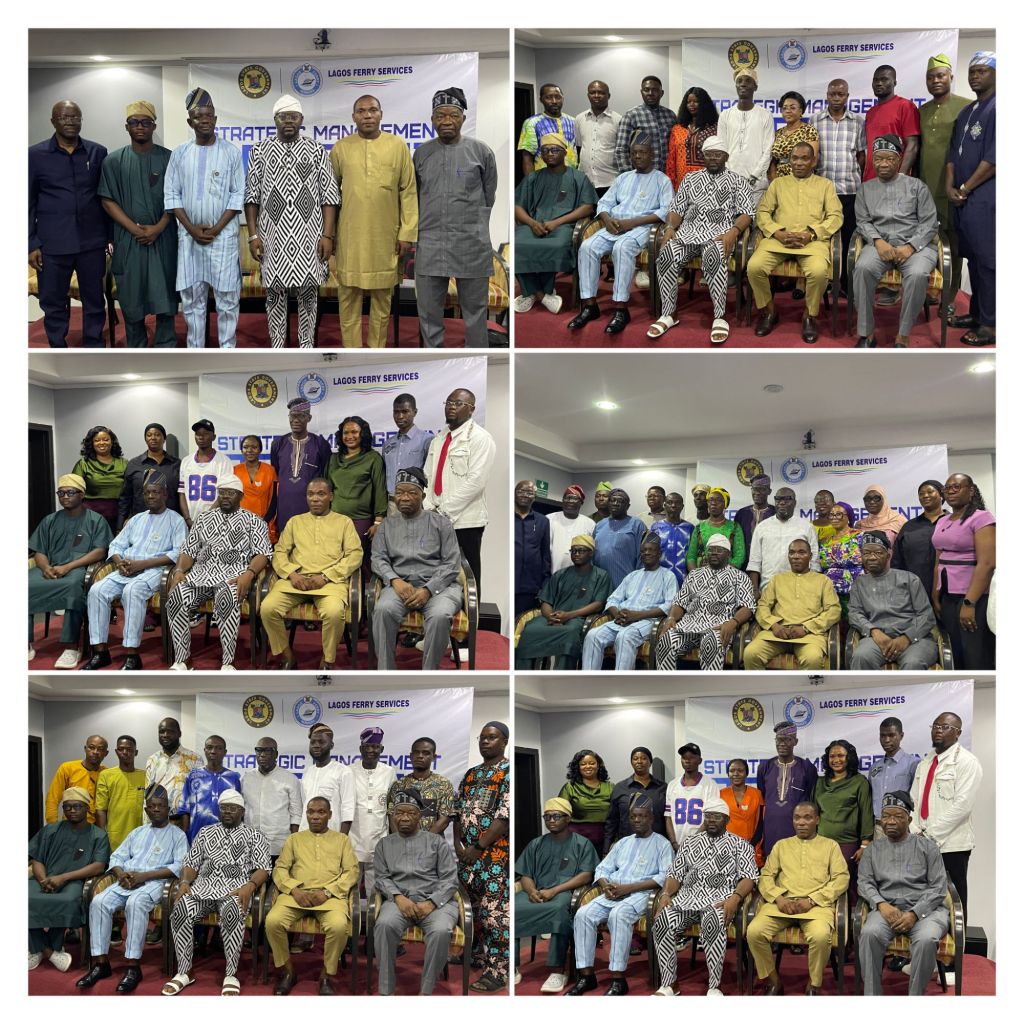
Lagos State has intensified efforts to reform its transportation system with a renewed focus on expanding waterway mobility as part of a broader strategy to ease congestion and strengthen trade. The initiative aims to integrate the state’s waterways more effectively into the existing transport network, improving connectivity, boosting operational efficiency, and unlocking new economic opportunities across key commercial corridors.
Balogun made this known during the 2026 Lagferry Staff Retreat at Epe Resort, where he stressed that the Lagos State Transport Policy, launched about three years ago, provides a comprehensive framework guiding both public and private sector participation in the state’s transport system.
According to him, the retreat was convened to build the capacity of personnel and align stakeholders with the vision of advancing water transportation, particularly as Lagos seeks to scale up its blue economy potential.
He explained that the planned eco water taxis would operate along the Lekki-Epe corridor to reduce road congestion and improve mobility for commuters and businesses, while the introduction of electric boats would support efforts to decarbonise emissions and promote environmental sustainability.
Balogun added that the state is also exploring expanded use of waterways for cargo movement across key corridors such as Lekki, Apapa, Ikorodu, and Badagry, with the aim of reducing pressure on major roads and improving overall transport efficiency.
Permanent Secretary of the Lagos State Ministry of Transportation, Mr. Olawale Musa, was represented by Engr Aderounmu Agbomeji, Director, Transport policy and coordination described the retreat as a strategic platform to reflect, plan, and align with the broader goal of making water transportation a key pillar of an integrated and efficient transport system.
He noted that Lagos, as a coastal megacity, possesses vast but underutilised waterways, adding that the government is committed to transforming them into a modern, reliable, and environmentally responsible mode of transport.
“Sustainable water transportation is not just about moving people and goods; it is about reducing congestion, lowering carbon emissions, cutting travel time, enhancing safety, and improving the quality of life,” Musa said.
He outlined priority areas for discussion at the retreat, including environmental sustainability, fleet modernisation, safety compliance, multimodal integration, affordability, and increased private sector participation.
Musa also highlighted plans to introduce electric-powered boats into the Lagferry fleet, noting that the initiative would reduce operational costs, lower fares, and position Lagos as a leader in eco-friendly water transport in Africa.
He stressed the importance of strict adherence to safety standards and collaboration with regulatory agencies such as the National Inland Waterways Authority (NIWA), Nigerian Maritime Administration and Safety Agency (NIMASA), and Lagos State Waterways Authority (LASWA).
Declaring the retreat open on behalf of the Permanent Secretary, Engineer Shafiriyu Agbomeji urged participants to develop practical, actionable recommendations that would strengthen collaboration and accelerate implementation of sustainable water transport initiatives.
In his presentation, Professor Saka Ramon Olawale of Lagos State University described water transportation as a highly lucrative but underexplored sector in Lagos.
Drawing from personal experience, he noted that travelling by water offers a faster, quieter, and more efficient alternative to road transport, citing significantly reduced travel time between Badagry and Ojo via waterways.
He argued that the growth of the sector depends largely on entrepreneurship and effective policy implementation, rather than infrastructure alone.
“With Lagos having about 22 percent of its landmass covered by water and several coastal communities, the opportunities in water transportation are enormous,” he said.
Olawale called on the government to create enabling policies that encourage private sector investment, while also integrating local boat operators into the formal system through training and capacity development.
He warned that excluding informal operators could lead to resistance, stressing the need for inclusive reforms to ensure sustainable growth across the sector.
The three-day retreat is expected to produce actionable strategies aimed at strengthening water transportation and advancing Lagos State’s broader economic development goals.
The Head of Marine Operations, Engineer Amos Semasa, has said.
Semasa disclosed that the agency has strengthened both its human and fleet capacity to improve service delivery, noting that boats have been deployed across 17 jetties covering 27 routes statewide.
According to him, the routes are strategically designed to connect major zones of Lagos, including Lagos West, Lagos Central, and Lagos East, ensuring wider accessibility and efficiency in water transportation.
“All these routes are carefully planned to cut across key areas of the state, allowing us to operate effectively from multiple jetties and serve a broader population,” he said.
On safety, Semasa highlighted Lagferry’s ongoing public enlightenment campaigns aimed at promoting safe water travel and increasing public confidence in the system.
He noted that the agency runs weekly radio programmes on Radio Lagos and Traffic Radio, titled Lori Omi and Water Waka, which educate residents on safety practices and new developments within the sector.
 ajasainfo.com
Leave a Reply