
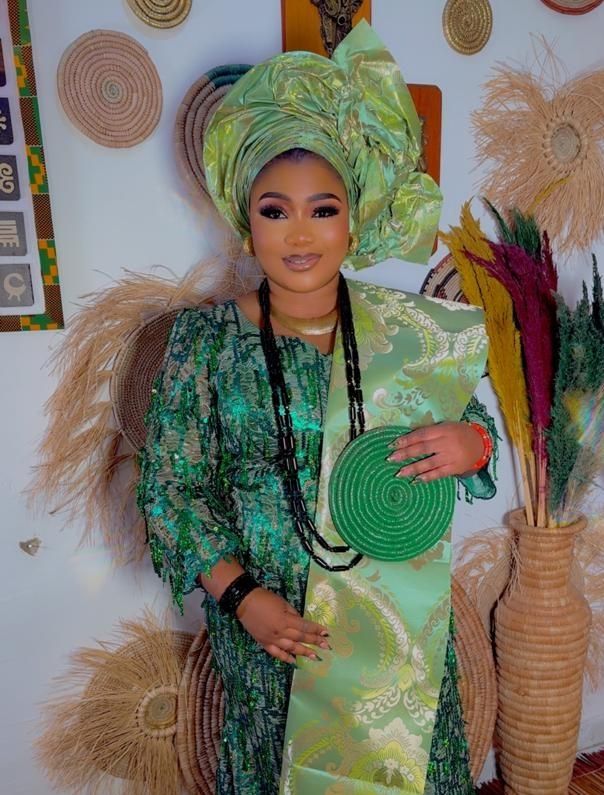
Orisha High Priestess urges Africans to reconnect spirituality, culture, and self in a globalised age
As Africa marked World Africa Day, conversations around identity, spirituality, and cultural preservation took on deeper meaning, with renewed calls for Africans to reconnect with their indigenous consciousness in an increasingly globalised world.
Observed annually on May 25, World Africa Day commemorates the founding of the Organisation of African Unity and serves as a reminder of Africa’s shared history, unity, and progress. Yet beyond celebration, the day has also become a space for deeper reflection on what many describe as Africa’s spiritual foundation.
At the centre of this reflection is Ori, a core concept in Ifá spiritual philosophy understood as the seat of consciousness, destiny, and personal divine authority. For Orisha High Priestess Ajetomiwa Omolola, Ori is not abstract philosophy but the starting point of African spiritual identity.
“Spirituality is the root of the African experience. Culture is its expression, history is its record, and politics is how it was later structured,” she said. “To speak about Africa without acknowledging its spiritual foundation is to speak about the branches while ignoring the roots.”
She also addressed widespread misconceptions about Ifá spirituality, particularly the idea that it is rooted in idol worship.
“Ifá is not about worshipping objects. It is a system of ancient wisdom, knowledge, divination, philosophy, and spiritual science,” she explained, noting that Òrìṣà represent natural forces and divine principles rather than objects of worship.
Beyond Religion: A Modern African Spiritual Identity
For many young Africans, spirituality is often filtered through religion or treated as cultural tradition. However, Ajetomiwa Omolola argues that spiritual identity today requires a shift towards conscious self-awareness and alignment with the inner self.
“Being spiritually grounded as an African today is to move beyond religion and tradition into conscious identity,” she said. “It is knowing the self, aligning with Ori, honouring nature, and cultivating a direct relationship with divine intelligence.”
She noted that modern life, especially in fast-paced cities like Lagos, is often seen as incompatible with spirituality.“Development and spirituality are not mutually exclusive. The real question is whether development without consciousness is sustainable,” she added.
The Quiet Cost of Modernity
As Africa continues to modernise, Ajetomiwa Omolola believes the continent has not lost spirituality, but has experienced a gradual weakening of indigenous systems of meaning.
“The deeper loss is not ritual alone, but the weakening of cultural memory and spiritual self-understanding.”
She added that this shift is visible in how many people experience daily life, including lack of clarity, emotional exhaustion, and overdependence on external validation.
The renewed global interest in African spirituality, she argues, reflects a broader human search for meaning in a fragmented world.
“Africa is widely recognised as the cradle of humanity,” she said. “Many people are now seeking deeper meaning, authentic connection, and holistic ways of understanding life beyond rigid systems.”
She explained that African spiritual frameworks integrate the self, nature, community, ancestors, and the divine, offering a worldview that contrasts with more fragmented modern approaches.
For Africans in the diaspora, this rediscovery also carries emotional significance, often tied to identity, belonging, and cultural reconnection.
Reclaiming Without Dilution
Despite growing global interest, Ajetomiwa Omolola cautions against the commercialisation of African spirituality.
“Spirituality can become a trend when it is approached as an aesthetic rather than a path of self-awareness and transformation,” she said.
She warned that superficial engagement risks stripping sacred systems of their depth, reducing philosophy to performance and tradition to content.
For her, preservation requires education, respect, and cultural responsibility, ensuring that spiritual knowledge is treated as heritage rather than commodity.
A Call for Conscious Living
For young Africans navigating modern life, her message is one of integration, not rejection.
“Spiritual reconnection does not require abandoning ambition or education,” Ajetomiwa Omolola said.
“It means bringing consciousness, balance, and cultural understanding into how you live.”
As Africa marks another World Africa Day, she asserts that the future of Africa is not only political or economic, but also spiritual, and it begins with remembering the self.
 ajasainfo.com
Leave a Reply