
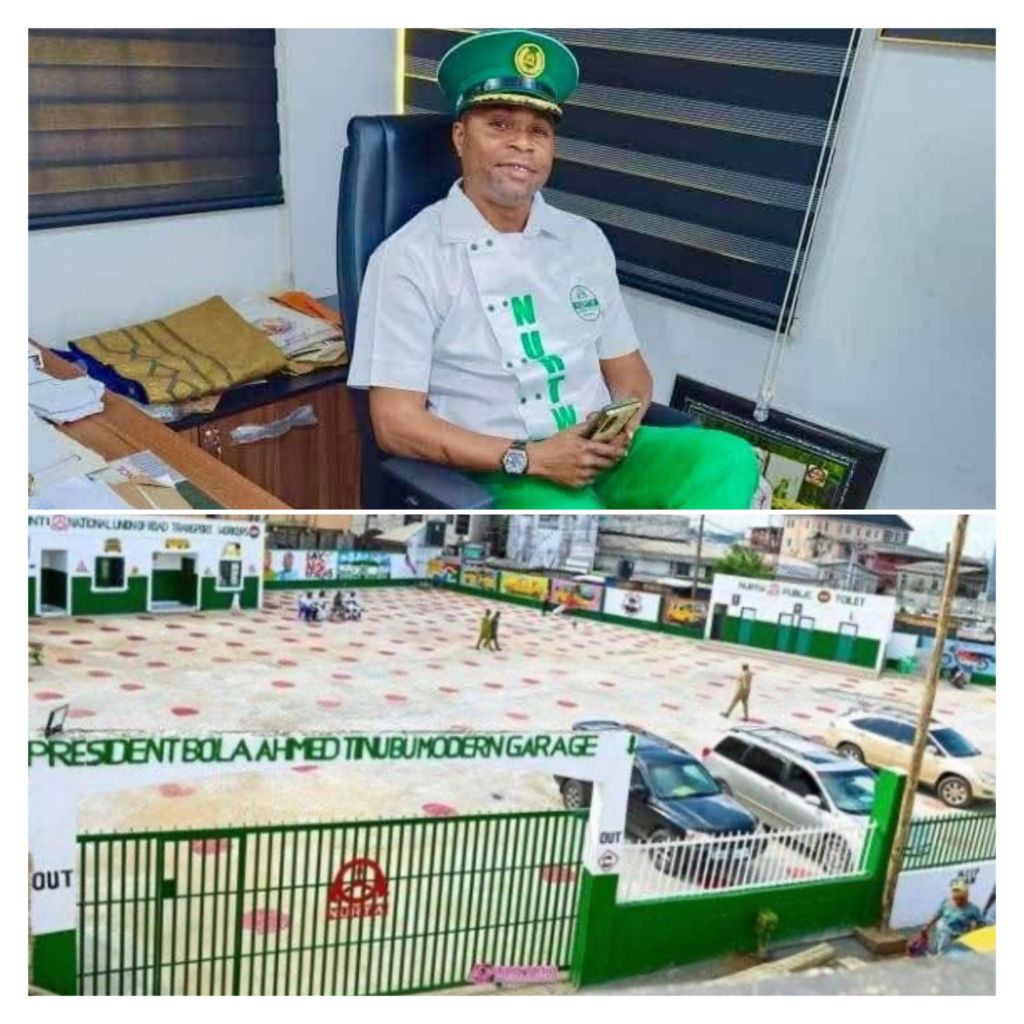
A transformation is underway in Lagos transport politics and it deserves to be told
For decades, the mere mention of the National Union of Road Transport Workers (NURTW) conjured a familiar and troubling image in the minds of ordinary Lagosians. Agberos, touts, violence, and the kind of organised chaos that made motor parks feel like no-go zones for the faint-hearted. It was a reputation built over years, cemented by headlines, and accepted, almost fatalistically, as the natural order of things.
Then came Alhaji Mustapha Adekunle, Tafa Sego, and something began to shift.
Since assuming the chairmanship of the Lagos State Council of the NURTW, Sego has done something that few before him dared attempt with any seriousness. He has looked the union’s troubled reputation squarely in the eye and refused to accept it as destiny. What we are witnessing under his watch is not merely administrative change. It is, by every honest measure, a genuine attempt at institutional transformation.
Empowerment Over Exploitation
Perhaps the most telling signal of Sego’s intent has been his Massive Empowerment Program for union members. For too long, rank-and-file NURTW members were seen as instruments, useful during elections and dispensable at every other time. The idea that the union could actually invest in its members, uplift them economically, and treat them as stakeholders rather than foot soldiers was almost radical by the standards of what came before.
This initiative speaks to a chairman who understands a fundamental truth: an empowered member is a disciplined member. When people have something to protect, a skill, a livelihood, a dignified identity, they are far less likely to become tools of destruction. Sego appears to grasp this, and it is to his enormous credit.
Building Structures, Not Just Influence
The launch of the Garage Terminal is another landmark that deserves far more celebration than it has received. Motor parks in Lagos have long been synonymous with disorder, overcrowded, poorly managed, and dangerous. A properly structured terminal is not just a logistical upgrade. It is a statement of intent. It says that this union intends to operate like a serious institution, not a street gang with a registered name.
Infrastructure is legacy. When Sego is long gone from that seat, the terminals he builds will remain. Commuters will pass through them, drivers will earn their living within them, and perhaps, just perhaps, they will represent a different story about what the NURTW can be.
Honouring the Past While Building the Future
There is something quietly powerful about a leader who pauses to appreciate long-standing members and staff. In the culture of many Nigerian institutions, loyalty is demanded but rarely rewarded. The fact that Sego has made deliberate effort to recognise those who have given years of service to the union is not a small thing. It builds morale, it reinforces institutional memory, and it tells the world that this union values people and not merely power.
It also sends a message downward through the ranks: that dedication is seen, that sacrifice is remembered, and that the culture of this union is changing from one of fear and coercion to one of honour and belonging. That cultural shift, invisible as it may seem on the surface, is often the most durable form of institutional reform.
Political Alignment: A Pillar of Reform, Not a Distraction
In the complex and often unforgiving landscape of Lagos politics, the NURTW has never had the luxury of neutrality. The union is too large, too visible, and too deeply woven into the fabric of daily Lagos life to exist in a political vacuum. Every chairman before Sego understood this. What distinguishes Sego, however, is how he has chosen to navigate that reality.
His push for robust political mobilisation in alignment with the APC is not, as cynics might suggest, simply a strongman securing his position through party loyalty. Look closer, and a more strategic logic reveals itself. By anchoring the union firmly within the orbit of the state government’s developmental agenda, Sego has done something tactically shrewd and institutionally necessary. He has bought the union room to breathe.
This is about synergy. When the NURTW is seen as a partner in progress rather than a parallel power structure to be managed or suppressed, it creates the conditions under which genuine reform becomes possible. Administrative bans, leadership crises, and government interference have historically derailed even the most well-intentioned union leadership in Lagos. Political alignment, handled wisely, removes that threat entirely and replaces confrontation with collaboration.
The result is stability and in an institution as historically volatile as the NURTW, stability is not a small achievement. It is the very soil in which empowerment programmes take root, in which terminals get built and remain standing, and in which long-term reform can be pursued without being ambushed by political turbulence.
The message Sego is sending to the state government is clear. We are not your problem to manage. We are your partner in building Lagos. That reframing, if sustained, changes everything about how the union is treated, resourced, and respected at the highest levels of government.
Of course, the counsel remains: alignment must never become submission, and partnership must never eclipse the union’s primary duty to its members. Political relationships are transactional by nature, and the NURTW must always ensure that its members and not political patrons remain the ultimate beneficiaries of every alliance forged. But wielded with integrity and intention, political alignment under Sego is not a compromise of the reform agenda.
It is, in fact, one of its most important enablers.
The Burden and the Opportunity
Let no one underestimate how difficult Sego’s task truly is. He is not simply running an organisation. He is attempting to change how millions of Nigerians think about that organisation. Public perception, once calcified, is stubborn. The work of image rehabilitation is slow, unglamorous, and often thankless. For every empowerment programme that goes unnoticed, there is one incident of indiscipline that makes the front page.
This is why consistency is everything. The transformation cannot be a campaign. It must be a culture. Every garage must reflect the new standard. Every official must be held to account. Every member must understand that the era of settling disputes with violence is incompatible with the union Sego is trying to build.
The chairman must also invest deliberately in the next generation of leadership within the union. Transformation that lives only in one man is transformation that dies when that man leaves. Mentorship, succession planning, and the deliberate grooming of reform-minded successors are not optional. They are the difference between a moment and a movement.
Alhaji Mustapha Adekunle, Tafa Sego, has been handed, or rather has earned, a rare opportunity. The opportunity to be the man who changed the story. Lagos is watching. Transport workers across Nigeria are watching. The millions of commuters who share roads with NURTW members every single day are watching.
The foundation is being laid. The early chapters of a different story are being written. What remains is the courage to see it through, to prioritise legacy over convenience, institution-building over political patronage, and the long game over the short.
The terminals he builds, the members he lifts, the culture he plants. These will outlast every political season and every administrative tenure. That is what legacy looks like. That is what Lagos needs from its NURTW.
Do that, Alhaji, and history will be kind.
 ajasainfo.com
Leave a Reply