
… To Deliver Cleaner, Faster, and Safer Water Transport in Lagos
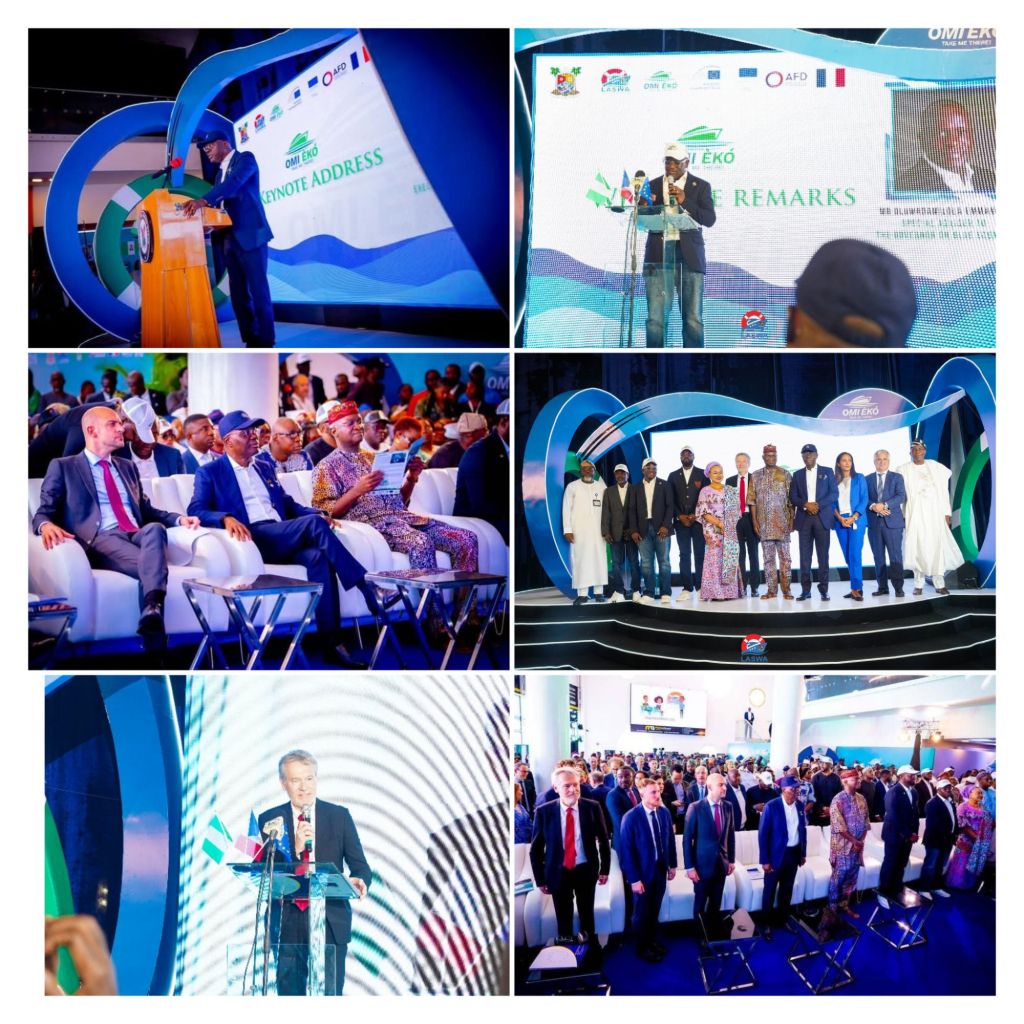
Lagos State Governor, Babajide Sanwo-Olu, officially launched a €410 million waterways project to enhance transportation in the state. The project, implemented by the Lagos State Waterways Authority (LASWA), consists of two components, with the second phase set to conclude by 2030. Funded by the Global Gateway Initiative, French Development Agency, European Union, and European Investment Bank, the project will develop 15 priority ferry routes spanning 140km, construct 25 modern ferry terminals and jetties with electric charging facilities, establish onshore depots for vessel maintenance, and improve land connections and road surfacing for transport services linking ferry terminals.
The project aims to transform Lagos’ water transportation system, reducing congestion and promoting sustainable mobility.
Sanwo-Olu described the Omi-Eko launch as “historic”, noting that the event was not just an unveiling ceremony but a “bold statement” reaffirming Lagos’ frontline leadership in delivering a sustainable integrated water transportation ecosystem.
The Governor said exploring the full range of waterways transportation was a critical priority in his administration’s THEMES+ Agenda to transform mobility in the metropolis.
He said: “Every Lagosian knows the frustration of traffic. But a few will remember that Lagos began as a network of islands, knitted together by water. Long before bridges connected city, boats carried dreams, goods, and people across the lagoons. This water body nourishes us, shapes the State’s identity and now, it will carry us into the future.
“The OMI-EKO project is a comprehensive, future-oriented blueprint for sustainable mobility in Lagos. It merges technology, environmental stewardship and smart design to create waterways that are not just navigated, but optimised. This is the kind of innovative projects cities around the world are building to confront the twin challenges of urban population growth and climate change. Lagos is not waiting to catch up, we are setting the pace.”
The project, it was said, would reduce the negative impact of transport on health, while also reinforcing the State’s ability to fight climate change. It would promote inclusive, more resilient means of mobility.
The investment would bring decarbonised transportation in Lagos, reducing CO2 emissions by 41,000 tonnes yearly. It is expected to take 25,000 passengers yearly, saving travel time by 3hrs on each trip.
Sanwo-Olu said the investment’s objective was to make transportation through water seamless, reduce carbon footprint, the air cleaner and transform waterways from barriers of separation into corridors of opportunity.
The Governor said: “The launch of this project is more than a ceremonial curtain pull. It is a covenant with our people, our planet, and with future generations. With OMI-EKO, we are lifting not only boats but lives, businesses, and communities. We are signaling that Lagos is ready to lead Africa’s urban transition by this bold, sustainable, and inclusive investment.”
Babatunde Raji Fashola, Former Governor of Lagos State who created LASWA in 2008, applauded Sanwo-Olu led administration for nurturing the agency to a viable global entity.
Fashola said the OMI-EKO project would further expand the scope of the State’s integrated transportation network, expressing optimism that the project would not stall, given the commitment of the European partners.
Commissioner for Transportation, Mr. Seun Osiyemi, said the project would unlock the full potential of Lagos inland waterways, bringing the final piece of the State’s Integrated Multimodal Transportation System to life.
“OMI-EKO aligns with broader Lagos Transport Policy, which promotes sustainability, inclusivity, and innovation, while ensuring that transport solutions serve the people while protecting the environment. The project is not just about ferry operations; it is about empowering communities, creating jobs, easing congestion, and reducing our carbon footprint.”
The French Minister for Europe and Foreign Affairs, Jean-Noel Barrot, expressed the EU’s full support for the project, citing the vast potential of Lagos’ waterways. He noted that the Omi-Eko project embodies innovative and sustainable mobility solutions tailored to the needs of the people, right at the heart of Lagos, Africa’s largest city.
According to him, this initiative exemplifies the kind of impactful partnership that can yield significant benefits for the people. He also highlighted that the project’s success is a testament to the strong bilateral cooperation forged during President Bola Ahmed Tinubu’s recent visit to French President Emmanuel Macron.
The Special Adviser to the Governor on Blue Economy and head of LASWA, Mr. Damilola Emmanuel, declared that the OMI-EKO project has transitioned from a vision to a reality that will revolutionize transportation in Lagos. Upon completion, 70 hybrid electric ferries will be deployed, significantly reducing pollutant emissions and promoting clean mobility. The project also entails upgrading 20 existing jetties with modern terminals across 15 major water routes.
Mr. Emmanuel explained that the first phase involves dredging and channelization of 15 ferry routes to ensure safer and faster transportation. He highlighted the benefits of the project, including technology transfer and capacity development for key waterway agencies, particularly LASWA.
Additionally, funding will be provided to the informal boat sector under the vessel industry initiative, fostering a water-based economy that benefits all stakeholders, from operators and private investors to passengers and citizens.
The EU Ambassador to Nigeria, Gautier Mignot, described the partnership as a historic milestone for Lagos and EU member states, emphasizing that the investment will improve the quality of life for residents. He stated that the project supports the development of 12 strategic waterway corridors, enhancing secure, efficient, and sustainable transport networks, with four of these corridors located in West Africa.
Mignot added that Nigeria and Lagos are leading the way in implementing Global Gateway projects, demonstrating the potential for ambitious and sustainable development. He expressed the EU’s commitment to expanding sustainable connectivity in the ECOWAS region and beyond, particularly along the Lagos-Abidjan corridor.
 ajasainfo.com
Leave a Reply