
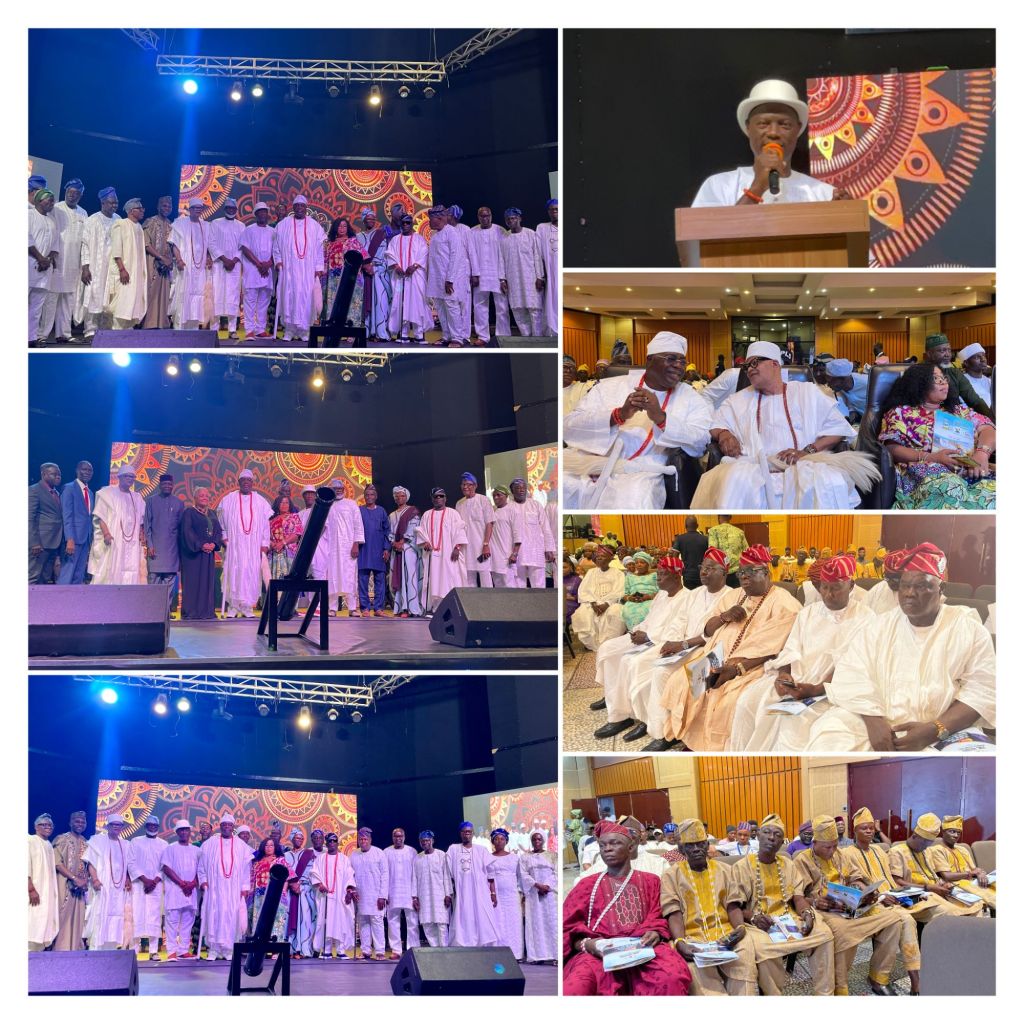
The King Kosoko Memorial Lecture 2025, themed “The Lagos Kingship, its Territory, Culture, Traditions, and its Districts before 1852,” took place on Sunday, September 21, at the Glover Memorial Hall, Lagos Island.
Prince Abiola Kosoko, the Oloja-Elect of Lagos stated as we embark on a journey to rediscover the expansive territory of Lagos under King Kosoko’s reign. The familiar names of Badagry, Epe, Ikorodu, and Ikeja, Lagos’ historical boundaries, stretch far into Otta and beyond, showcasing a kingdom of significant influence,
Prince Kosoko highlighted that King Kosoko’s reign as the Oba of Lagos was notable for protecting the Lagos territory, with claims recognized by the British government through the Lagbasa Truce on September 27, 1854, and the subsequent signing on September 28, 1854. He emphasized that this agreement acknowledged Lagos’ fishing port as an integral extension of the eastern part of Lagos, under King Kosoko, his Chiefs, and Cabbaccers.
The Oloja-Elect further noted that over time, Lagos’ territory and fishing ports have metamorphosed into autonomous towns and first-class kings. However, the creation of states and the Land Use Act of 1978 dramatically reduced Lagos’ territory, making it Nigeria’s smallest state.
He pointed out that Lagos’ culture and traditions face challenges due to rapid infrastructure development and governance approaches that often overlook the delicate balance between modernization and cultural preservation.
He emphasized that this lecture offers a valuable opportunity to examine historical territorial boundaries, analyze cultural and traditional practices, and discuss governance and cultural preservation. Renowned historians and scholars will share insights, shedding light on Lagos’ significant role in Nigerian history.
Prince Abiola Kosoko expressed gratitude to the King Kosoko Royal Family and Oloja of Lagos Chieftaincy for preserving these legacies, noting that their presence honors King Kosoko’s memory and contributes to the vibrant discourse on Lagos’ heritage.
He then unveiled the King Kosoko Royal Family Oriki. This traditional chant, rich in history and cultural significance, serves as a guiding light for the royal family and the community.
According to Prince Abiola Kosoko, the unveiling of the Oriki was a deliberate effort to establish credibility and provide guidance, particularly in light of potential confusion surrounding the traditional chant. The newly unveiled Oriki was crafted with the collaboration of family members who are elders and through meticulous research.
“This Oriki is a representation of our heritage and values,” Prince Abiola Kosoko stated. “We are proud to share this with our people, and we believe it will serve as a unifying force for our community.”
Barr. ‘Bimbola Salu-Hundeyin, Secretary to the Lagos State Government, represented by her Assistant, emphasized the importance of preserving cultural heritage and promoting unity.
She noted that King Kosoko’s legacy is one of determination, strength, and an unwavering pursuit of dignity for his people. “The Lagos Kingship has always stood as a custodian of peace, justice, and community identity,” she stated.
Toke Benson-Awoyinka, Commissioner for Tourism, Arts, and Culture, represented by Adebowale Adenike, highlighted King Kosoko’s significant contributions to Lagos’ history and culture. She noted that King Kosoko was a leader of vision and influence who played a crucial role in shaping the economic landscape of Lagos during a pivotal era. King Kosoko’s legacy continues to inspire pride, courage, and strong cultural identity in the people of Lagos.
The commissioner emphasized the importance of preserving cultural heritage and promoting tourism as a vital tool for education, unity, and sustainable development. She commended the royal family and organizers for keeping King Kosoko’s memory alive, ensuring that future generations understand the significance of his contributions and the enduring value of his legacy.
Prof. David Aworawo, a renowned historian and expert in International Relations and Strategic Studies at the University of Lagos, has highlighted the profound impact of King Kosoko’s reign on Lagos’ history and growth. He noted that the economy of Lagos is a staggering 10 times larger than that of 10 other states in Nigeria, attributing this success to the legacies of notable leaders such as Gabaro and Akinshemoyin.
As a professor of Industrial Relations and Strategic Studies, Aworawo emphasized the importance of understanding Lagos’ rich history to appreciate its current development.
Aduke Gomez discussed the historical significance of Lagos, highlighting its strategic location within a network of inland waterways known as the “slave coast” in the 18th century. She noted that the Lagos kings utilized canoes for trade and fighting purposes, some of which could carry up to 100 persons and were equipped with guns.
Gomez also explained that the Lagos lagoon is the only break in the West African coastline, which proved useful after the abolition of the transatlantic slave trade.
Additionally, Gomez stated that the indigenous people initially referred to the area as Oko because it was a pepper farm, and this history is preserved in the palace built on the pepper farm. She also touched on the origin stories of Lagos, noting that the Aworis, led by King Olofin, migrated to Widow Island before the warriors from Benin arrived.
Gomez further mentioned Oba Kosoko’s settlement in Epe and the historical context of the island’s leadership and organization by chiefs called “white-capped” in recognition of their dominion.
Oba Olufolarin Ogunsanwo, Alara of Ilara Land praised the King Kosoko Royal Family for their consistency in organizing the annual memorial lecture, noting that it gets better with each passing year. He expressed his enthusiasm for the event’s continued success, stating that he believes next year’s lecture will surpass the current one in terms of impact and significance.
Alara emphasized the importance of promoting cultural heritage and passing it down to future generations. He commended the royal family for their efforts in preserving the legacy of King Kosoko and ensuring that his contributions to the history and development of Lagos are not forgotten.
Oba Moruf Oyekunle, Olu of Iwa, expressed his gratitude to the King Kosoko Royal Family for organizing the memorial lecture, which brought together people to understand the history of Lagos. He noted that the event provided a valuable opportunity for him to learn more about the city’s rich heritage.
Prof. Ajetunmobi Rasheed, representing the Vice Chancellor of Lagos State University of Education (LASUED), Prof. Balikis, thanked the Oloja-Elect for preserving culture and ensuring that King Kosoko’s legacy lives on.
Prof. Rasheed noted that King Kosoko’s name will forever be remembered for his bravery in rejecting colonialism. He expressed hope that the annual event will be sustained, highlighting its importance in promoting cultural awareness and understanding.
Prof. Olumuyiwa Olamade, representing the Vice Chancellor of Lagos State University of Science and Technology (LASUSTECH), Prof. Olumuyiwa Odusanya, congratulated the Oloja Elect and emphasized the significance of the lecture in learning and preserving history. He stated that attendees were not just present to participate but to gain valuable insights that would be passed on to students.
Prof. Olamade promised that LASUSTECH would be part of the event annually, underscoring the importance of history in tracing heritage and understanding cultural identity.
 ajasainfo.com
Leave a Reply