
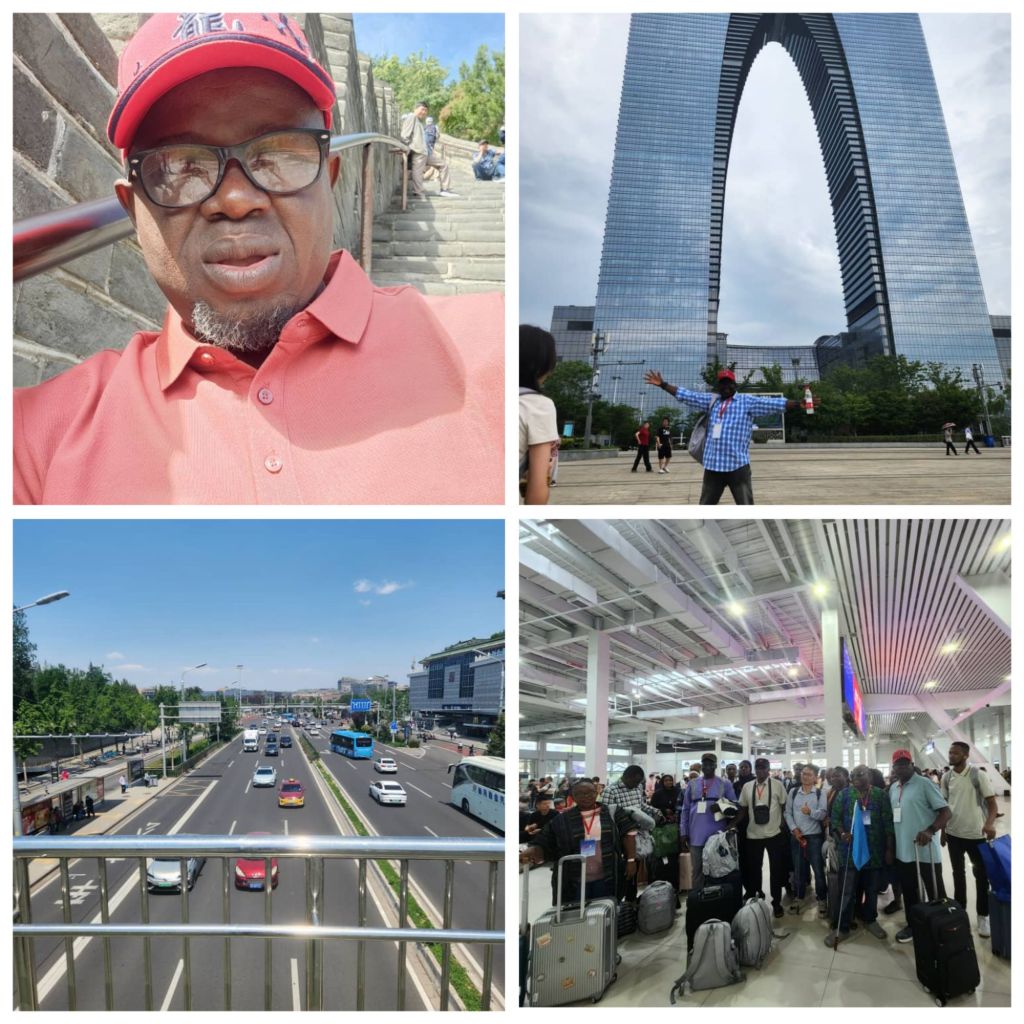
By Temidayo Hassan
Yes, pepper. While packing for my China trip, I tucked in some dried local pepper, knowing full well how my taste buds rebel at bland meals. I was going to a different world, and like many Nigerians traveling abroad, I brought a piece of home with me, not just for flavour but for identity.
That small act would later remind me of how we Africans constantly carry our uniqueness wherever we go. But while we are proud of our cultures, I came back from China realizing something painfully universal: different African countries, same foundational problems.
From the moment I landed, I was immersed in a system that works. Trains arrive on schedule. Roads are smooth and linked in meaningful patterns. Technology is embedded in everyday life. Most impressively, there’s a visible plan, clear, focused, and national in outlook.
I couldn’t help but ask myself; Why is this so hard for us in Africa?
During casual conversations with fellow Africans that were part of the training from Tanzania, Gambia, and Lesotho. It became even clearer. We share the same complaints.
In most African countries, development stops and restarts with each new administration. Unlike China, where leadership continues to build on existing strategies, we often abandon policies mid-stream for political reasons.
A road construction in China takes 18 months. In Africa, the same might take 8 years if it is not abandoned entirely. I rode on highways in China that stretched for miles, uninterrupted. I thought of some parts of Nigeria where the journey to a neighbouring town can ruin your car and your mood.
While young people in China are coding, designing, building, and researching, many young Africans are job-hunting endlessly or relocating because their countries offer no opportunity. The talent is there. The system isn’t.
Across different African countries, the cancer of corruption has been normalized. From procurement fraud to contract padding, there is little consequence for public theft. But in China, whether you are a minister or a village head, systems are in place to hold you accountable.
What struck me most in China was not just infrastructure or technology, but patriotism. The people work not just for their pocket but for their country. In many African countries, we only think tribal, political, or personal, rarely national.
That pepper I brought with me? It made the meals bearable. But more than that, it reminded me that while we preserve our taste, culture, and identity, we must also change what is no longer serving us.
Africa is not poor. Africa is poorly managed.
The same problems haunting Nigeria are alive in Tanzania, Gambia, and even Lesotho in varying shades. Different names, same issues. If our leaders would travel not just to tour but to learn, they’d see that the transformation we seek is not magic. it is discipline, planning, and collective sacrifice.
My China trip was eye-opening. I came back not just with stories and souvenirs but with conviction. Until African countries confront their foundational weaknesses, leadership, infrastructure, and accountability, we will keep flying out with pepper and returning with pain.
But I still believe in us.
From Lagos to Dodoma, Banjul to Maseru, we can rise. But only if we stop making excuses and start making progress.
 ajasainfo.com
Leave a Reply